Camelia: Your Secret for Unforgettable Branding
There’s a specific kind of frustration that hits when you are staring at a blank screen, trying to design a logo or a wedding invitation, and the standard system fonts just aren’t cutting it. You need something that feels personal, something that bridges the gap between professional polish and that raw, human touch. This is exactly where Camelia enters the conversation. It isn’t just another addition to your font library; it is a design solution that captures the essence of handcrafted typography without sacrificing the crispness required for modern digital and print media.
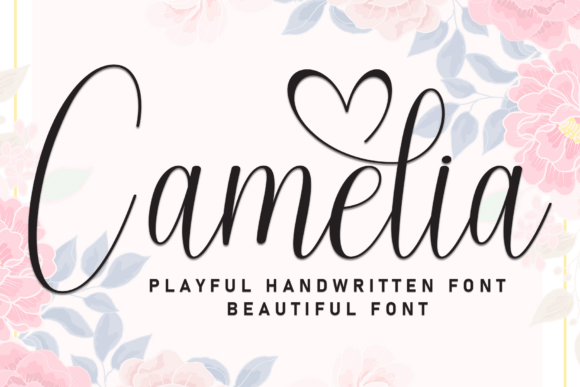
At its core, Camelia is a premium display font that leans heavily into a handwritten aesthetic, but it does so with a level of sophistication that many script fonts miss. When you look at the letterforms, you see a dance between elegance and whimsy. The strokes have a natural, fluid rhythm that mimics the pressure and movement of a real pen, yet the consistency across the baseline ensures that it remains readable. It’s disarmingly friendly, possessing a visual personality that feels like a warm invitation. For anyone involved in brand identity, this is crucial. A typeface often speaks before the words do, and Camelia speaks with a voice that is both approachable and chic.
Visual Characteristics and Design Appeal
What makes Camelia stand out in a crowded marketplace of creative fonts is its balance. Some handwritten fonts can be too erratic, making them impossible to read in longer sentences, while others are so rigid they lose their soul. Camelia sits in the sweet spot. The curves are soft and flowing, avoiding sharp, aggressive angles. This creates a visual rhythm that is easy on the eyes, making it an excellent choice for display purposes where you need to grab attention immediately.
From a design perspective, the character set offers a lot of versatility. You often find that premium fonts like this include alternates or ligatures—those subtle variations in how letters connect—that prevent the "digital repetition" look. If you use a word twice, you don't want the 't' to look identical every time if you are aiming for authenticity. Camelia manages to maintain that hand-drawn feel even when used in professional contexts. It possesses a modern typography sensibility, meaning it understands current trends in spacing and weight, ensuring it doesn't look dated the moment you publish your project.
Strategic Applications for Creative Professionals
Understanding where to deploy a font like Camelia is just as important as liking the way it looks. Because it is a display font, it shines brightest when used for headlines, logos, and short bursts of impactful text. It is not intended for body copy in a novel or a technical manual, but for the moments where you need to inject personality, it is invaluable.
Branding and Logo Design
For small business owners and entrepreneurs, logo design is often the first hurdle. If your brand identity leans towards the boutique, artisanal, or lifestyle sectors, Camelia is a strong contender. Imagine a bakery, a boutique clothing line, or a lifestyle coach using this typeface. It instantly communicates that the business is human-centric and detail-oriented. It suggests that there is a real person behind the brand who cares about aesthetics.
Editorial and Publishing
In the world of editorial design, contrast is king. If you are laying out a magazine spread or a blog header using a sturdy sans serif font for your body text, dropping Camelia in for pull quotes or section headers can break the monotony. It draws the reader’s eye to the most important parts of the page. It works beautifully for titles on book covers, particularly in genres like romance, self-help, or creative non-fiction, where a personal connection with the reader is paramount.
Digital Presence and Social Media
The digital landscape is noisy. On platforms like Instagram or Pinterest, you have milliseconds to stop a user from scrolling. Social media graphics that utilize a bold, handwritten font like Camelia tend to perform well because they mimic the authentic content people share in their stories. It feels less like an ad and more like a note from a friend. Furthermore, in web design, using Camelia for specific call-to-action buttons or hero section headlines can soften the corporate feel of a site, making the user experience more welcoming.
Practical Guidance on Implementation
Adopting a new font into your workflow requires a bit of strategy. You can't just drop it in and hope for the best. Here is how to get the most out of Camelia in your projects.
Font Pairing Strategies
The most critical aspect of using a script or handwritten font is pairing it with the right partner. Camelia has a lot of personality, so pairing it with another decorative font usually results in visual chaos. The best approach is contrast. Look for a clean, geometric sans serif font or a classic serif font to complement it.
- The Modern Minimalist: Pair Camelia with a light-weight sans serif. The clean lines of the sans serif will anchor the whimsy of Camelia, creating a look that is professional yet creative.
- The Editorial Classic: Combine it with a high-contrast serif font. This works well for wedding invitations or upscale branding where you want a traditional foundation with a modern twist.
Readability and Hierarchy
Visual hierarchy is about guiding the viewer's eye. Use Camelia for your primary headline (H1) or a specific call out. Do not use it for a paragraph explaining your return policy. If you are designing a poster, make the headline large and airy. Because it is a display font, it needs breathing room. If you squash it into a tight space or make it too small, the legibility drops, and the charm turns into clutter.
Licensing and Usage
When you invest in a creative font like this, you are buying design assets that elevate your work. Always check the commercial licensing. If you are a freelance designer creating a logo for a client, ensure your license covers end-product usage. If you are a crafter making physical goods to sell on Etsy, verify that the license permits the creation of physical products. Most premium font foundries are clear about this, but it is a step many hobbyists overlook until it becomes a legal headache.
Evaluating Project Fit
Before you commit to Camelia for a major project, do a "vibe check." Does the font’s personality align with the message? If you are designing a corporate law firm brochure, Camelia is likely the wrong choice—it’s too friendly and informal. However, if you are designing packaging for a new line of organic teas or a flyer for a local art fair, it is perfect. It bridges the gap between "professional" and "personal" better than almost any other style of typeface.
Ultimately, typography is about communication. A font like Camelia isn't just a set of letters; it is a tone of voice. By incorporating it thoughtfully into your designs, you move away from generic templates and toward work that feels bespoke, intentional, and deeply human. Whether you are a seasoned graphic designer looking to refresh your toolkit or a small business owner taking control of your own marketing, embracing a font with this much character is a step toward more engaging, effective visual communication.