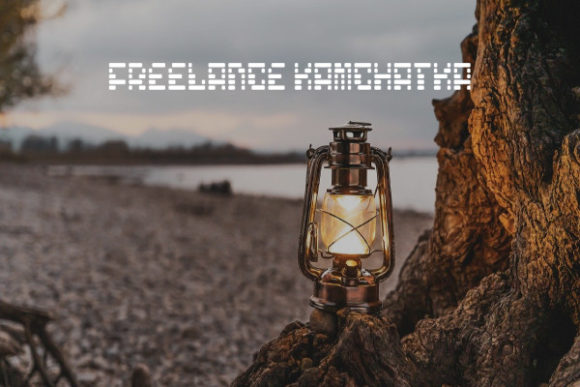
Freelance Kamchatka: Playful Stripes for Bold Design
Finding a typeface that genuinely stands out without feeling chaotic can be a challenge. Many fonts try to capture attention with elaborate swirls or extreme weights, but sometimes, the most effective visual impact comes from a clever structural concept. Enter Freelance Kamchatka. Designed by Vic Fiegel, this typeface breaks away from the smooth, vector-perfect curves we see in modern typography. Instead, it offers a textured, pixelated aesthetic combined with distinct horizontal striping. It is a premium font that doesn't take itself too seriously, making it an excellent tool for designers looking to inject personality into their projects.
Anatomy of a Digital Texture
When you first look at Freelance Kamchatka, your eye is immediately drawn to its construction. Unlike a standard serif font or a clean sans serif font, this design embraces a hybrid style. It sits somewhere between a decorative typeface and a pixel art homage. The defining characteristic is the "striped" texture that runs through the letterforms. These aren't just random lines; they are carefully placed to create a sense of rhythm and movement. This gives the font a distinct handmade quality, even though it is a digital asset.
The personality of the font is undeniably playful and energetic. The pixelated edges soften the overall look, preventing the stripes from looking too industrial. This combination makes it feel retro yet contemporary. It evokes the nostalgia of old dot-matrix printers or 8-bit video games but applies that aesthetic to a modern display context. If you are working on a brand identity that needs to feel approachable, fun, and a little bit quirky, this typeface fits the bill perfectly. It avoids the coldness of geometric sans serif fonts and opts for a warmer, more tactile vibe.
Strategic Applications for Creative Projects
Understanding where to use a font like Freelance Kamchatka is just as important as liking how it looks. Because of its high level of detail and decorative nature, it falls firmly into the category of a display font. This means it is designed for headlines, titles, and short bursts of text where impact is the priority. It is not intended for body copy in long-form articles or dense reports; the striped texture would cause eye strain over long paragraphs. However, for the right application, it is a powerful design asset.
Branding and Logo Design
For entrepreneurs and small business owners, your logo is your handshake. It needs to be memorable. Freelance Kamchatka works exceptionally well for businesses in the creative, entertainment, or lifestyle sectors. Think about a children’s party planning service, a retro gaming cafe, or a modern craft brewery. Using this font in your logo design immediately communicates a specific tone: you are fun, you are creative, and you are not afraid to be different. It pairs surprisingly well with clean, minimalist sans serif fonts. You can use Freelance Kamchatka for the main brand name and a simple font for the tagline to maintain readability while keeping the brand’s playful edge.
Digital and Print Marketing
In the fast-paced world of digital marketing, stopping the scroll is the main objective. This is where the font shines. It is perfect for social media graphics, particularly for Instagram stories, YouTube thumbnails, or TikTok overlays. The pixelated texture renders well on screens, and the stripes add visual complexity that catches the eye even on small mobile devices.
For print, consider how this typeface interacts with paper texture. It is excellent for packaging design for products aimed at younger demographics or niche hobbyists. Imagine a sticker pack or a poster design using this font—the texture adds depth that a flat, standard font simply cannot provide. It also works well for editorial design in magazines or zines that focus on art, music, or pop culture, where the typography needs to contribute to the visual storytelling.
Guidance on Implementation and Pairing
Using a decorative font effectively requires a bit of restraint and strategy. Here is some practical guidance on how to integrate Freelance Kamchatka into your workflow without overwhelming your design.
- Evaluating Project Fit: Before selecting this font, look at your content. Is the subject matter serious, corporate, or technical? If yes, this might not be the right fit. However, if the goal is to evoke joy, creativity, or nostalgia, it is an ideal choice. It works best when the design has enough "breathing room" (white space) to let the texture of the letters stand out.
- Mastering Font Pairing: This is crucial. Because Freelance Kamchatka is visually dense and textured, you need a contrast. Avoid pairing it with other decorative, script, or handwritten fonts. The result would be visual noise. Instead, look for a modern typography staple—a geometric sans serif or a simple humanist sans serif. These clean fonts act as a canvas, allowing the playful nature of Freelance Kamchatka to pop without competing for attention.
- Testing Readability: Always test your design at the size it will be viewed. While it is a creative font, you want to ensure the pixelation doesn't blur together at smaller sizes. It generally holds up well, but high-contrast backgrounds (like white text on a dark background) can sometimes make the stripes look thicker. Experiment with colors that complement the texture rather than fight it.
- Licensing and Usage: Since this is a premium font, ensure you review the commercial licensing terms provided by the designer, Vic Fiegel. If you are using it for client work or physical products for sale, you need the appropriate license. Respecting the creator's work ensures the ecosystem of high-quality design assets remains sustainable.
Enhancing Audience Engagement
Ultimately, typography is about communication. The specific style of Freelance Kamchatka does more than just spell out words; it communicates an emotion. It signals to your audience that your brand is approachable and that you care about the details of your presentation. In a sea of generic Arial or Times New Roman, using a textured, stripe-based font shows confidence and creativity.
For content creators and bloggers, using this font for section headers or featured image text can break the monotony of a long page. It provides visual anchors that guide the reader's eye down the page. For marketers, it can be the secret weapon in a campaign that needs to feel distinct from the competition. It doesn't just sit on the page; it interacts with it.
Freelance Kamchatka by Vic Fiegel is more than just a collection of letters; it is a design statement. It bridges the gap between pixel art and modern display typography. Whether you are designing a logo, crafting a social media post, or packaging a product, this font offers a unique texture that can elevate your work from standard to standout. It proves that sometimes, the best way to be professional is to show a little bit of personality.