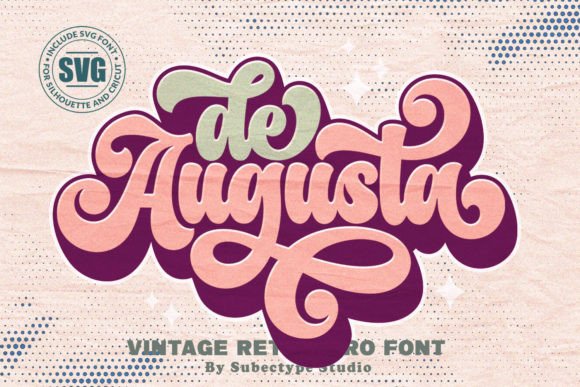
De Augusta: A Bold Retro Typeface for Modern Brands
In the world of modern typography, finding a font that feels both nostalgic and fresh is rare. De Augusta manages to bridge that gap effortlessly. Inspired by the bold lettering and typographic trends of the 1970s and 80s, this vintage retro font brings a distinct personality to any project. It isn’t just about looking old; it is about capturing the energy of an era defined by bold shapes and expressive design. If you are working on a project that needs to stand out with character, De Augusta offers a toolkit that feels both familiar and entirely new.
Visual Style and Distinct Character
At its core, De Augusta is a display font built for impact. The letterforms feature the heavy, rounded edges typical of the disco era, yet they maintain a clean structure that prevents them from looking cluttered. The typeface balances thick strokes with subtle retro quirks, giving it a voice that speaks of confidence. It avoids the rigidity of geometric sans serif fonts and the stuffiness of traditional serif fonts. Instead, it occupies a space where playful nostalgia meets professional execution.
What makes De Augusta particularly useful as a creative font is its versatility within that retro niche. It does not scream "cartoon" or "childish." Instead, it evokes a sense of cool, vintage authenticity. The personality of the font is bold and assertive, making it an ideal choice when you want your message to be read immediately. It works beautifully as a standalone hero element or as part of a larger composition. When you use De Augusta, you are not just typing words; you are curating a specific vibe.
Strategic Applications for Designers and Brands
Understanding where a vintage retro font works best is crucial for good brand identity. De Augusta excels in environments where you need to grab attention quickly. For logo design, it offers immediate recognition. A logo set in De Augusta feels established and grounded, even if the brand is brand new. It tells a story of heritage, which can be a powerful psychological tool for startups wanting to appear trustworthy or for established brands reimagining their roots.
Consider the practical applications across different mediums:
- Packaging Design: On a shelf crowded with modern, minimalist designs, a product using De Augusta creates a stark contrast. It works exceptionally well for craft beverages, artisanal goods, or any product aiming for a "classic" feel.
- Editorial Design: In editorial design, such as magazine covers or book titles, De Augusta provides the necessary hierarchy. It draws the reader's eye exactly where you want it, serving as the perfect counterpoint to a clean body text.
- Web and Digital: While it is a display typeface, it translates well to web design hero sections and social media graphics. It creates high-contrast headers that stop the scroll on platforms like Instagram or Pinterest.
- Merchandise: The font was practically born for apparel. Whether for t-shirts, tote bags, or posters, its bold structure ensures legibility and style at larger scales.
Mastering Readability and Hierarchy
One of the most common pitfalls in using display fonts is sacrificing readability for style. De Augusta manages this balance well, but it requires the designer's hand to guide it. Because it is a bold typography style, it is best used for headlines, sub-headlines, and call-to-action buttons. It is generally too dense for long paragraphs of body copy, where a standard sans serif font or serif font would provide better reading comfort.
When building visual hierarchy, De Augusta acts as the anchor. Imagine a poster layout: the main event name in De Augusta instantly establishes the mood. The supporting details—dates, times, and locations—can then be set in a complementary typeface. This contrast creates a dynamic visual flow. If you pair De Augusta with a clean, geometric sans serif, the retro font becomes the "shout," while the sans serif becomes the "conversation." This interplay is essential for professional editorial design and effective marketing materials.
Pairing and Technical Considerations
Successful font pairing is about contrast, not competition. De Augusta has a strong personality, so it needs partners that are willing to play a supporting role. Avoid pairing it with other decorative or handwritten fonts, as this will create visual chaos. Instead, look for neutral typefaces. A tall, thin sans serif can look stunning next to the wide, heavy strokes of De Augusta. Alternatively, a classic, readable serif font can ground the retro energy with a touch of sophistication.
From a technical standpoint, this premium font comes with features that streamline the design process. It is PUA (Private Use Areas) encoded, which is a significant benefit for designers who use software like Adobe Illustrator, Photoshop, or Cricut machines. You don't need specialized design software to access the full character set; all the glyphs, swashes, and alternates are available through your standard character map. This ease of access makes it a practical design asset for everyone from seasoned professionals to hobbyists and crafters.
Evaluating Fit for Your Project
Before committing to De Augusta, it is worth asking a few strategic questions about your project's goals. Does your brand voice need to feel nostalgic, rebellious, or classic? If the answer is "modern, corporate, and minimalist," De Augusta might be too expressive. However, if you want to inject warmth, personality, and a touch of history into your work, it is an excellent fit.
Testing the font is simple. Type out your specific headlines or logo text. Look at the kerning and the spacing. Does the letter combination look balanced? In vintage retro fonts, certain letter pairs can sometimes create awkward gaps or overlaps, so manual tracking adjustment is often necessary to achieve a polished look.
Finally, consider the commercial application. As a commercial font, De Augusta is licensed for professional use, meaning you can safely use it for client work, merchandise, and digital products without legal headaches. It is an investment in your toolkit that pays dividends every time you need to create a design that feels bold, authentic, and unmistakably retro.