Scratch Crayon: More Than Just a Creative Font
Finding the right typeface for a project often feels like searching for a specific tool in a massive workshop. You need something that performs a specific job, but also carries the right weight and texture. When a project calls for a sense of unfiltered joy, nostalgia, or childhood energy, standard sans serif fonts often fall flat. This is where Scratch Crayon enters the conversation. It is not merely a typeface; it is a design asset that bridges the gap between professional typography and the raw charm of a child’s drawing.
Anatomy of a Nostalgic Display Font
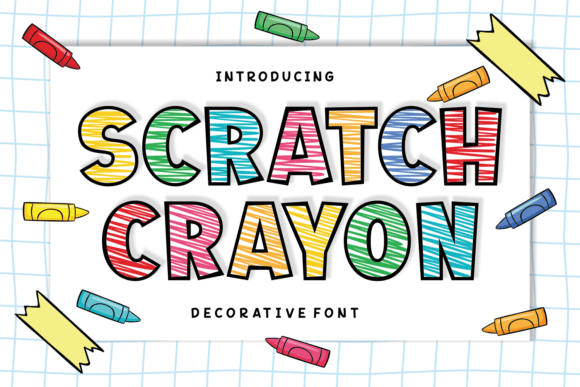
To understand the utility of Scratch Crayon, you have to look past the name and examine the construction. Visually, this is a bold, decorative display font defined by its intricate internal texture. The outlines are thick and friendly, providing a sturdy silhouette that commands attention on posters or packaging. However, the true character lies inside those outlines. The "scratch" effect mimics a cross-hatched crayon stroke, creating a tactile, hand-scribed appearance. Unlike a standard handwritten font, which often relies on thin, flowing lines, Scratch Crayon offers high density and contrast. It feels substantial, much like a wax crayon pressed hard against cardboard.
This specific aesthetic solves a common problem in modern typography: the lack of warmth. Digital text is inherently sterile. By utilizing a typeface that mimics physical media, you instantly inject personality into the layout. It suggests that the message was crafted with care, appealing directly to an audience that values authenticity over corporate polish.
Strategic Applications for Designers and Brands
As a premium font, Scratch Crayon is versatile within specific contexts. It is not designed for long-form body text in legal contracts, but it excels as a hero element in visual hierarchy. For brand identity projects, particularly those targeting family-oriented markets or food and beverage industries, this font creates an immediate emotional connection. Imagine a local bakery’s logo or a children’s toy label; the Scratch Crayon typeface communicates fun and friendliness without needing a single supporting illustration.
Here are practical areas where this font transforms a layout:
- Publishing and Editorial Design: Use it for chapter titles in middle-grade novels or headers in parenting magazines. It grabs attention while maintaining a playful tone.
- Packaging Design: For products like granola, candy, or art supplies, the tactile texture of the font reinforces the physical nature of the product inside.
- Digital and Social Media: In the fast-scrolling environment of Instagram or TikTok, social media graphics need to pop instantly. The high-contrast, textured nature of Scratch Crayon stops the thumb. It works exceptionally well for sale announcements or event headers where energy is key.
- Event Materials: Birthday invitations, school fair posters, and fundraiser flyers benefit from the "hand-made" charm. It suggests a personal touch that formal serif fonts cannot replicate.
Mastering Font Pairings and Hierarchy
One of the most frequent questions regarding decorative fonts is how to pair them. Because Scratch Crayon is a display font with a heavy visual texture, it dominates a layout. If you pair it with another complex script font or a detailed serif, the result will be visual noise. The goal is contrast.
For professional web design or editorial design, pair Scratch Crayon with a clean, geometric sans serif font. A typeface like Roboto, Open Sans, or Helvetica provides a neutral breathing space that allows the crayon texture to shine without overwhelming the reader. Use the sans serif for your subheadings and body copy to ensure readability, and reserve Scratch Crayon exclusively for the main headlines or "call to action" text.
Consider the visual hierarchy carefully. Because the font has a "drawn" quality, it naturally draws the eye. Use this to your advantage in marketing materials. If you are designing a flyer for a summer camp, the headline "Summer Fun Awaits" in Scratch Crayon sets the mood, while the details regarding dates and fees remain in a standard legible font. This separation ensures the design feels spirited but remains functional.
Evaluating Fit and Commercial Utility
Before integrating Scratch Crayon into a brand identity system, it is vital to evaluate the project's tone. This is a creative font, best suited for informal, energetic, or youthful contexts. It may not be the right choice for a fintech startup or a luxury law firm. However, for a toy company, a pediatric dentist, or a craft brewery looking for a retro vibe, it is an indispensable tool.
When assessing this design asset, check the character map thoroughly. A robust premium font should offer more than just A-Z. Scratch Crayon includes comprehensive punctuation, numerals, and multilingual support. This is crucial for commercial font usage. If you are a publisher working on a book that will be distributed internationally, or a marketer creating localized campaigns, you cannot afford to have missing glyphs for accented characters. Always test the numerals as well; in many decorative fonts, numbers are an afterthought, but for packaging and pricing, they need to be just as legible and stylistically consistent as the letters.
The Tactile Advantage in a Digital World
We live in a screen-saturated era. Consequently, designs that mimic the physical world often resonate more deeply with viewers. Scratch Crayon leverages this psychological trigger. The cross-hatched texture suggests the smell of crayons and the feel of paper, evoking a sense of nostalgia that flat, vector-based modern typography cannot achieve.
For small business owners and entrepreneurs, this font offers a way to stand out. In a sea of minimalist, geometric logos, a logo utilizing Scratch Crayon feels distinct and human. It suggests that the business is approachable, creative, and perhaps a little bit playful. This perception can be a powerful differentiator in marketing materials, from business cards to website headers.
Ultimately, choosing a typeface like Scratch Crayon is about controlling the narrative of your design. It tells the viewer that this content is meant to be enjoyed, not just consumed. By applying it thoughtfully to the right projects—balancing its exuberance with clean supporting fonts—you can transform standard layouts into memorable visual experiences. Whether you are crafting social media graphics, designing packaging, or laying out a magazine, this font provides the "drawn-from-scratch" authenticity that modern audiences crave. Give your next project that distinct, hand-crafted edge and watch your message resonate.